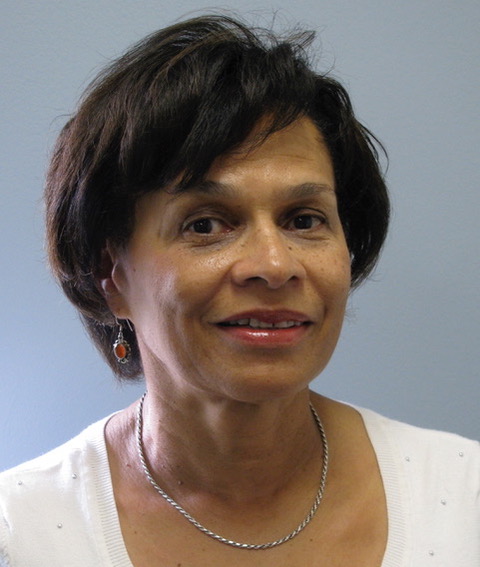
Cleopatra H. Caldwell

  • Co-Associate Director, Program for Research on Black Americans
  • Assistant Professor of Health Behavior and Health Education
  • Research Investigator and Lecturer, African American Mental Health Research Center
  • Research Center for Group Dynamics & Psychology Department

    M.A., Human Development, 1975, Wayne State University
    A.M., Psychology, 1983, University of Michigan
    Ph.D., Social Psychology, 1986, University of Michigan

Cleopatra Howard Caldwell's research interests involve the mental health risks and opportunities involved in early childbearing, perspectives of multiple family members who have been affected by the birth of a baby to a teenage mother, and black churches as community-based institutional support systems. Some of her recent publications include 'Social Networks: Community-based institutional supports for Black women', in N.J. Burgess & E. Brown's African American women: An ecological perspective (2000), and 'Culturally-competent research methods in African American communities: An update', in R. Jones' Advances in African American Psychology (1999).


Letha Chadiha

  • Associate Professor of Social Work
  • Co-director, Community Liaison Core in the Michigan Center on Urban African American Aging Research

B.S., 1965, Tuskegee Institute, Tuskegee Institute
M.A., Anthropology, 1970, Washington State Universit
M.S.W., Social Work, 1985, University of Michigan
Ph.D., Social Work and Anthropology, 1989, University of Michigan


Letha Chadiha specializes in caregiving by African American women to older African Americans. Chadiha?s recent works on caregiving investigate primary caregivers' help for emotional problems and rural-urban differences in caregiving. Also specializing in research on recruitment and retention of ethnically diverse elders in research, she is co-editor for a more recent supplement of The Gerontologist (2011) focusing on the science of recruitment and retention among these elders. Chadiha is principal investigator on a three-year NIH/NIGMS/NCMHD R25 (GM-089637; 02/02/2010-08/31/2013) research training grant, "U-M Social Work/Nursing Bridges to the Doctoral Program," the first of its kind to be awarded to a social work school.


Linda M. Chatters

  • Faculty Associate, Program for Research on Black Americans
  • Professor, School of Public Health, Department of Health Behavior and
    Health Education
  • Associate Professor, School of Social Work
  • Faculty Associate, Center for Research on Ethnicity, Culture, and Health

    B.A., Psychology, 1975, University of California, Berkeley
    Ph.D., Psychology, 1983, University of Michigan

Linda M. Chatters' research interests encompass family and church-based social support and the relationship between religious involvement and health. Her recent works include the co-authored book (with Robert
Taylor and Jeff Levin) Religion in the Lives of African Americans: Social, Psychological and Health Perspectives. Recent articles include" Social support, traumatic events and psychological distress among African Americans" in Journal of Marriage and Family and "Supportive relationships with church members among African Americans" appearing in Family Relations (both co-authored with Karen Lincoln and Robert Joseph
Taylor) and “Religious and Spiritual Involvement Among Older African Americans, Caribbean Blacks, and Non-Hispanic Whites: Findings From the National Survey of American Life” and “Religious Participation Among
Older Black Caribbeans in the United States” (both co-authored with Robert Joseph Taylor and James S. Jackson). Dr. Chatters is a Fellow of the Gerontological Society of America (Behavioral and Social Sciences Section). She is also Designated by Thomson-ISI as a Highly Cited Researcher in the Category of General Social Sciences. ISI Author Publication Number A0347-2004-0.Dr. Chatters is currently Principal Investigator for the grant, Religious Involvement Among Older African Americans funded by the National Institute on Aging.

Hector Gonzalez

  • Associate Professor at the Wayne State University Institute of Gerontology and Department of Family Medicine and Public Health Sciences 

B.S., Psychology, 1982, University of New Mexico
Ph.D., Clinical Psychology, Behavioral Medicine/Health Psychology, 1998, California School of Professional Psychology

Dr. González’ primary research interest is in Latino Health and aging with a focus on epidemiology of neurodegenerative disorders. He is currently Principle Investigator of the Hispanic Community Health Study/Study of Latinos Neurocognitive Reading Center, which is funded by the National Heart Lung Blood Institute and National Institute of Neurologic Disorders and Stroke among others. In addition to investigating the epidemiology of neurocognitive change among Latinos in HCHS/SOL, he is studying relationships between acculturation and health in this large (n=16,415), multisite, prospective cohort study of Latino health. He is also Principal Investigator of a National Institute of Mental Health funded study of Vascular Depression and Function in Older Latinos. Additionally, Dr. González is examining healthcare use among ethnic/racial minorities in the United States.

Carmen Green

  • Associate Professor of Anesthesiology, Medical School
  • Faculty Associate, Research Center for Group Dynamics

    B.S.,University of Michigan, Ann Arbor, MI
    Michigan State University College of Human Medicine

Dr. Green is an Attending Physician in the Multidisciplinary Pain Center, and serves on the Department of Anesthesiology's Education and Research Committee. Administratively, Dr. Green serves as Medical Director for the Acute Pain Service within the Department of Anesthesiology Multidisciplinary Pain Center. Dr. Green's health services research agenda focuses on 1) racial, ethnic, age, gender, and social stratification variables on pain management outcomes; 2) quality of life and outcomes for patients with acute, cancer, and chronic pain; 3) physician variability in pain management decision-making; 4) quality of care and access to pain management; and 5) graduate and continuing medical education in pain management.

James S. Jackson

  • Research Professor, Research Center for Group Dynamics
  • Professor of Psychology
  • Director of the Institute for Social Research

    M.A., Psychology, 1970, University of Toledo
    Ph.D., Social Psychology, 1972, Wayne State University

Research efforts include conducting national and international surveys of black populations focusing on racial and ethnic influences on life course development, attitude change, reciprocity, social support, physical and mental health and coping. Jackson is currently principal investigator of one of the most extensive social, political, economic, and mental and physical health studies of the African American and Caribbean populations ever conducted, "The National Survey of American Life" and the "The Family Survey across Generations and Nations," and the "National Study of Ethnic Pluralism and Politics." Teaching centers on social factors in health, race and racism, and social exchange and social influences.

sjoe

Sean Joe

  • Faculty Associate, Research Center for Group Dynamics
  • Assistant Professor, School of Social Work
  • Assistant Professor, Psychiatry, University of Michigan Medical School
  • Director, Emerging Scholars Interdisciplinary Network

B.A, 1991 Africana Studies, State University of New York at Stony Brook
M.S.W, 1994 Social Welfare, State University of New York at Stony Brook
Ph.D., 1999 Social Work, University of Illinois at Urbana-Champaign

Dr. Joe's current research interests focuses on developing a father focused family-based interventions to prevent urban African-American adolescent males from engaging in multiple forms of self-destructive behaviors, including suicidal behavior. Dr. Joe co-chairs the Emerging Scholars Interdisciplinary Network's Research study Group on African- American Suicide. He also has significant interest in theoretical and methodological issues related to community level intervention research to address disparities, community organizing, and positive youth development.

Harold W. Neighbors

  • Faculty Associate, Research Center for Group Dynamics
  • Associate Professor of Health Behavior and Health Education, School of Public Health
  • Director, Center for Research on Ethnicity, Culture, and Health (CRECH), School of Public Health
  • Director, Paul B. Cornely Postdoctoral Program, School of Public Health

    M.A., Social Psychology, 1979, University of Michigan
    Ph.D., Social Psychology, 1982, University of Michigan

Harold W. Neighbors' research interests and areas of publication include psychiatric epidemiology with an emphasis on ethnic and cultural influences on the assessment (diagnosis and case-finding) of mental disorder, and the utilization of informal and professional services by African Americans. His most recent publications focus on the role of African American ministers as a primary help source among African Americans seeking help for emotional problems, the impact of semi-structured diagnostic instruments on black-white differences in depression and schizophrenia, and the role of goal-striving stress on African American mental health. He is co-editor (with James S. Jackson) of the book, Mental Health in Black America (1996), and is Principal Investigator of the NIH-funded CRECH Doctoral Training Program, Promoting Ethnic Diversity in Public Health Training.

Daphna Oyserman

  • Research Professor, Research Center for Group Dynamics
  • Professor of Psychology and Professor of Social Work

    M.S.W., 1983, Hebrew University, Jerusalem
    M.A., Social Psychology, 1985, University of Michigan
    Ph.D., Social Work & Social Psychology, 1987, University of Michigan

How do social and cultural contexts shape the sense we make of ourselves? In what ways does self-concept (the way we think about ourselves) influence how we think generally? My research focuses on the processes by which social and cultural contexts set up and afford particular ways of making sense of ones' self; create meaning; and structure perceived possibilities. Specific research includes studies of antecedents and consequences of self-concept and racial-ethnic identity. A second line of interest focuses on preventive interventions, including developing theoretical frameworks to understand the process of risk and how it can be reduced and frameworks for understanding how culture, race, place, and developmental phase influence the generalizability of interventions.

Sela V. Panapasa

  • Assistant Research Scientist, Program for Research on Black Americans

M.S., 1988, Computer Education, Johnson & Wales University
M.A., 1995, Sociology, Brown University
Ph.D., 2000, Sociology, Brown University

Dr. Panapasa's research interests are in the area of racial health disparities and population dynamics across the lifecourse.  She conducts both survey driven and community-based research designs, and completed the first representative study on Pacific Islander American health and healthcare utilization. Dr. Panapasa also played a visible leadership role in raising awareness to the problems of health disparities among Native Hawaiian and Pacific Islanders.  Her work seeks to improve the health and well-being of numerically small vulnerable populations through evidence-based research and interventions, including efforts to build healthy Native Hawaiian and Pacific Islander communities in the United States and U.S. Associated Pacific Islands.  In her early research she studied social support and intergenerational exchanges among aged Pacific Peoples living in the U.S. and Pacific region.   Dr. Panapasa currently serves as a member on the U.S. Census Bureau National Advisory Committee on Racial, Ethnic and Other Populations, U.S. Department of Health and Human Services (HHS) Advisory Committee on Minority Health and she recently completed her term as chair of the Census Advisory Committee on Native Hawaiian and Pacific Islanders.


Robert M. Sellers

  • Faculty Associate, Research Center for Group Dynamics
  • Charles D. Moody Collegiate Professor of Psychology
  • Chair, Department of Psychology


    B.A., Psychology, 1985, Howard University
    Ph.D., Social Psychology, 1990,University of Michigan

Current research examines the role of race in the lived experiences of African Americans.  This research has three foci.  First, Dr. Sellers and his students have developed a conceptual framework for understanding African Americans’ racial identity attitudes.  A second foci has been on investigating the ways in which African Americans experience and cope with racial discrimination.  A third foci has been explicating the processes by which African American parents transmit messages to their children about what it means to be black in America.  In addition to his work on the role of race in African Americans’ lives, Dr. Sellers also has research interests in the factors associated with the academic and social development of college athletes.

Robert Joseph Taylor

  • Director, Program for Research on Black Americans
  • Faculty Associate, Research Center for Group Dynamics
  • Sheila Ford Collegiate Professor of Social Work

B.A., Sociology, 1974, Northwestern University
M.S.W., 1976, University of Michigan
Ph.D., Social Work and Sociology, 1983, University of Michigan

Robert Joseph Taylor is the Sheila Feld Collegiate Professor of Social Work and the School's Associate Dean for Research. He is a Faculty Associate with the Program for Research on Black Americans at the Institute for Social Research and the Center for Afro-American and African Studies. He also is affiliated with the Center for Research on Race, Religion and Health. Professor Taylor has published extensively on the informal social support networks (i.e. family, friends, and church members) of adult and elderly Black Americans. He has been Principal Investigator of several grants from the National Institute on Aging which examine the role of religion in the lives of Black and White elderly adults. He is also a Co-Prinicipal Investigator of the National Survey of American Life. He has edited two books: Family Life in Black America (1997) and Aging in Black America (1993), with James S. Jackson and Linda M. Chatters. He is the founding editor of African American Research Perspectives and has been on several editorial boards including the Journal of Gerontology: Social Sciences, Journal of Marriage and the Family, and Family Relations.

Daphne C. Watkins

  • Faculty Associate, Program for Research on Black Americans
  • Assistant Professor, School of Social Work

    B.A., Anthropology & French, 2002, University of North Carolina, Wilmington;
    Ph.D., Health Education and Health Behavior, 2006, Texas A&M University, College Station, TX

Broadly, Dr. Watkins’ interests include: gender disparities in mental health and mental illness; health education and behavior; and intervention/prevention research. Currently, her work explores how gender role socialization influences mental health over the life course -- particularly among black men. She is also interested in using quantitative and qualitative methodologies to increase what we know about mental illness and how it impacts the health and health behaviors of black men. Her research agenda aims to (1) use evidence-based strategies to improve the physical and mental health of black men, and (2) increase knowledge about the relationship between culture, gender, and the development of risky behaviors that place black men at high risk for poor health status.